
Comic Book Ages Explained: From the Golden Age to Today
Collectors toss around names like Golden Age, Silver Age and Bronze Age as if everyone knows them. If you have just found a box of old comics, they can sound like jargon. Here are the comic book ages explained in plain words: what each name covers, roughly when it runs and how to tell which one a comic belongs to.
One thing first: these are informal labels. Nothing printed on a comic says which age it comes from, the dates are approximate, and collectors disagree about exactly where one age ends and the next begins.
Free collection review · Same-day cash · No obligation · South Jersey, Philadelphia and Northern Delaware
Comic Book Ages Explained: Why Collectors Use Era Names
An era name is shorthand. Calling a comic Silver Age tells another collector roughly when it was printed and about what it cost, in two words. In order, the five names you will meet most often are:
- the Golden Age, about 1938 to 1956
- the Silver Age, about 1956 to 1970
- the Bronze Age, about 1970 to 1985
- the Copper Age, about 1985 to 1992
- the Modern Age, 1992 to today
To place a particular comic, find the year in the indicia, the small print on the first page or inside front cover that names the publisher and gives a publication date. Our dating guide, how to tell how old a comic book is, adds the other clues.
The Golden Age: Roughly 1938 to 1956
The Golden Age begins around 1938, the year Action Comics #1 introduced Superman. Batman arrived in Detective Comics #27 in 1939, the same year Superman got his own title with Superman #1, and Batman #1 in 1940 brought the first Joker and Catwoman. Marvel’s story starts here too: as Timely, it published Marvel Comics #1 in 1939 and Captain America Comics #1 in 1941, while Fawcett’s Captain Marvel first appeared in Whiz Comics #2 in 1940.
Comics from these years cost 10¢, but that price lasted until about 1962, so the cover price alone cannot separate a Golden Age comic from a later one. The indicia year can. Handle any you find with clean, dry hands, keep them flat, and do not try to clean or repair them. Our page on Golden Age comics looks at this era in more depth.
The Silver Age: Roughly 1956 to 1970
Collectors often point to Showcase #4 from 1956, which introduced the new Flash, as the start of the Silver Age. On the DC side, look for 1950s and 1960s Superman, Batman, Wonder Woman, Flash, Green Lantern and Justice League.
Many familiar Marvel heroes date from this era. Fantastic Four #1 came out in 1961. In 1962, Amazing Fantasy #15 gave us the first Spider-Man and Journey Into Mystery #83 the first Thor. Then 1963 brought Tales of Suspense #39 with Iron Man, Strange Tales #110 with Doctor Strange, and the first issues of Amazing Spider-Man, Avengers and X-Men.
Cover prices make a handy rough guide here: 10¢ until about 1962, 12¢ for most of the 1960s, and 15¢ from late 1969, right around the end of the era. Our Silver Age comics page has more on this period.
The Bronze Age: Roughly 1970 to 1985
Prices kept climbing through the 1970s, from 15¢ to 20¢, 25¢, 30¢ and 35¢, so the cover is a rough clue in this era too. Many 1960s series simply carried on, which is why Amazing Spider-Man had already reached #129 by 1974.
The era added new characters as well. Bronze Age landmarks collectors watch for:
- Ghost Rider, who first appeared in Marvel Spotlight #5 in 1972
- the Punisher and Iron Fist, who arrived in Amazing Spider-Man #129 and Marvel Premiere #15 in 1974
- Wolverine, whose first full appearance is in Incredible Hulk #181, also 1974
- Storm, Colossus and Nightcrawler, part of the new team in Giant-Size X-Men #1 in 1975
Comics like these are called key issues; our guide to what a key issue comic is explains the idea.
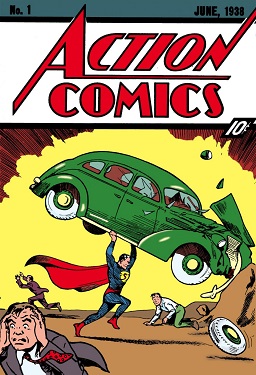
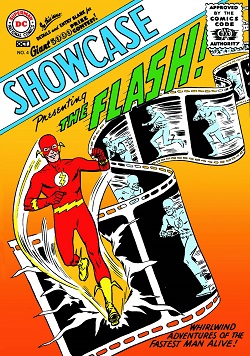
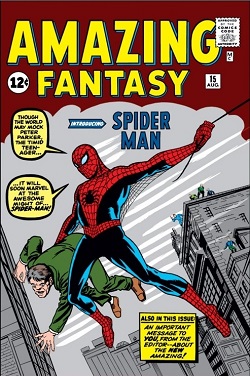
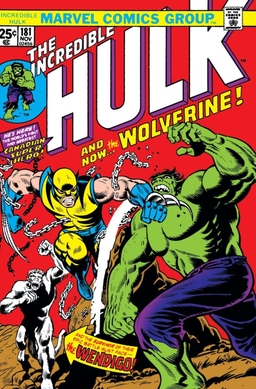
Covers shown to help you recognize the books. The characters and cover art are trademarks and copyrights of DC and Marvel.
The Copper Age and the Modern Age
Collectors call comics from about 1985 to 1992 the Copper Age, and everything from 1992 on the Modern Age. Two points help when these newer books turn up.
First, a newer comic can still hold an old story. Some older stories were reprinted later in new comics, collected editions and facsimile editions. A modern cover price, a recent indicia date or the word reprint or facsimile places the comic in the newer era, however old the art looks.
Second, one series can stretch across more than one age. Amazing Spider-Man #1 from 1963 is a Silver Age comic, while #129 from the same series is Bronze Age. The name on the cover does not settle the question; the year in the small print does.
What the Ages Mean If You Plan to Sell
With the comic book ages explained, the practical question is which eras a buyer actually wants. ComicBookBuying.com buys whole collections in person from a base in Cherry Hill, New Jersey, serving South Jersey, Philadelphia with its Pennsylvania suburbs, and Northern Delaware around Wilmington. The ages map to our buying list like this:
- Silver Age Marvel shares the top of the list: the 1960s titles above, from Amazing Fantasy to X-Men. See Silver Age Marvel.
- So does older DC, from the Golden Age to the 1960s: Superman, Batman, Wonder Woman, Flash, Green Lantern and Justice League, along with Action Comics and Detective Comics.
- Bronze Age comics follow: 1970s to mid-1980s issues, especially Marvel with important first appearances and long runs. See Bronze Age comics.
We do not buy Copper and Modern Age comics on their own, and we will tell you so honestly; when we buy an older collection, though, we take the whole lot, newer comics mixed in included. Because we later resell the comics to collectors a few at a time, our offer for the collection is a wholesale one, and it is paid as same-day cash if you accept.
Dating a box of old comics? The price printed on the cover is one of the quickest clues, and Old Comic Book Cover Prices walks through it. For a whole collection found in a family home, start with What to Do With Old Comic Books.
Not Sure Which Comic Book Age You Have? Start Here
You do not need to label a single comic by era before contacting us. Use our short contact form to send a few photos, such as some covers, one page of small print and an open box, or simply describe what you found. Sorting and grading are our job, and getting in touch does not oblige you to sell.
Phone lines by area: (856) 438-8222 for Cherry Hill and the rest of South Jersey, (215) 390-0020 for Philadelphia and its Pennsylvania suburbs, and (302) 414-0544 for Northern Delaware.
Purchases happen in person and by appointment, inside roughly a two-hour drive. Bring a manageable collection to a warehouse of ours in New Jersey, Pennsylvania or Delaware, or, for a bigger one, we look at your photos and then hold the Free Collection Review at your location. The step-by-step process is laid out on our how it works page.
Common Questions
Who decides where each comic book age begins and ends?
Nobody officially. The era names are informal labels collectors use, so the dates are approximate and people disagree about the edges.
Why do collectors link Showcase #4 to the Silver Age?
Showcase #4, published in 1956, introduced the new Flash, and collectors often name it as the start of the Silver Age.
My comic is from 1970. Which age does that make it?
It sits right on the border between the Silver Age and the Bronze Age, so you may hear it called either. The title and issue number say more than the label.
What is the Copper Age of comics?
It is the name collectors use for comics from about 1985 to 1992, the stretch between the Bronze Age and the Modern Age.
Does a reprint of a Golden Age story count as Golden Age?
No. A reprint or facsimile edition belongs to the year it was printed, not the year of the story inside. A modern cover price or a newer indicia date usually gives it away.
Local Comic Book Buyers Serving Greater Philadelphia
We buy in person, by appointment, within about two hours of our Cherry Hill, New Jersey base. Call the team closest to you.
South Jersey and Cherry Hill
Camden, Burlington and Gloucester counties and the rest of South Jersey.
Philadelphia and PA Suburbs
Philadelphia and the surrounding Pennsylvania suburbs.
Northern Delaware
Wilmington and the surrounding Northern Delaware communities.
Get a Free Collection Review
Send a few photos or call. Same-day cash, no sorting and no obligation to sell.