
What Is a Key Issue Comic? A Plain Guide With Examples
Read anything about old comics and you will soon bump into the phrase key issue. So what is a key issue comic? It is a comic that collectors want more than the issues around it, usually because of a first appearance, an origin story, a death or a famous cover.
Keys often look just like their neighbors in a box. Below are the different kinds, well-known examples from the 1930s to the 1970s, and a simple way to check your own comics.
Free collection review · Same-day cash · No obligation · South Jersey, Philadelphia and Northern Delaware
What Is a Key Issue Comic, in Plain Terms?
Picture a long row of one title in number order. Most issues are ordinary chapters. A key is the one collectors single out because of what happens inside it or what appears on its cover. Keys usually fall into a few groups:
- First appearances: the first time a character shows up anywhere.
- Origin stories: the issue that tells how a character came to be.
- Deaths: an issue in which a major character dies.
- Famous covers: artwork collectors remember and seek out for its own sake.
- First issues: a #1 of a title that went on to run for many years.
Being a key depends on what is in the comic, not on age alone; an old comic is not automatically one.
First Appearances, With Well-Known Examples
A hero’s first appearance is often in a comic with a different title from the one the hero became known for. Familiar examples:
- Superman in Action Comics #1 (1938)
- Batman in Detective Comics #27 (1939)
- the Joker and Catwoman in Batman #1 (1940)
- Spider-Man in Amazing Fantasy #15 (1962)
- Thor in Journey Into Mystery #83 (1962)
- Henry Pym in Tales to Astonish #27 (1962)
- Iron Man in Tales of Suspense #39 (1963)
- Doctor Strange in Strange Tales #110 (1963)
- the Silver Surfer and Galactus in Fantastic Four #48 (1966)
- the Black Panther in Fantastic Four #52 (1966)
So a box without a single Spider-Man title can still hold the first Spider-Man. Go by the comic’s own title and number, not just who is on the front.
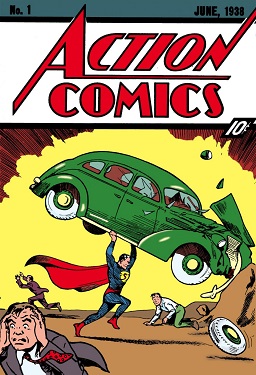
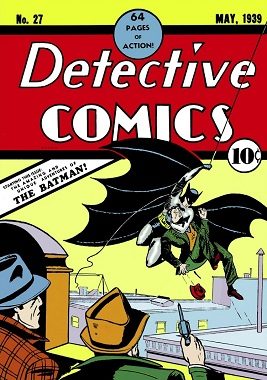
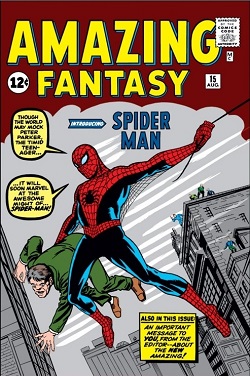
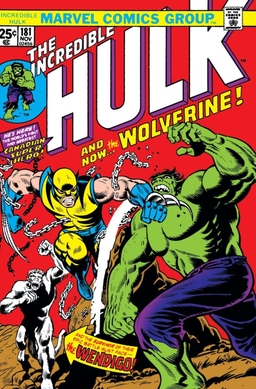
Covers shown to help you recognize the books. The characters and cover art are trademarks and copyrights of DC and Marvel.
First Issues and New Teams
A #1 of a title that ran for years is often a key, though not every #1 is one. Familiar first issues include Superman #1 (1939), Fantastic Four #1 (1961), Incredible Hulk #1 (1962), Amazing Spider-Man #1, Avengers #1 and X-Men #1 (all 1963), Daredevil #1 (1964) and Iron Man #1 (1968).
A fresh start for a team can matter too. Giant-Size X-Men #1 (1975) introduced a new X-Men lineup with Storm, Colossus and Nightcrawler, and X-Men #94, also from 1975, is where that lineup takes over the regular series.
One caution: confirm the publication year in the small print before deciding a #1 is one of the famous early ones.
Why Keys Hide in the Middle of a Stack
Plenty of keys have ordinary-looking numbers. Fantastic Four #48 and #52 sit partway through a long run, while Amazing Spider-Man #129 (the first Punisher) and Incredible Hulk #181 (the first full Wolverine), both from 1974, are deep into theirs. Marvel Spotlight #5 (1972, the first Ghost Rider) and Marvel Premiere #15 (1974, the first Iron Fist) carry no special number either.
That is why it helps to keep runs, meaning stretches of consecutive issue numbers, together and in the order you found them. A key can sit unnoticed between two everyday issues for decades, and splitting boxes makes it easy to lose. Our guide to comic book ages shows where these 1970s keys fall on the timeline.
How to Check Your Own Comics for Keys
A first pass needs no special knowledge. Work through a handful of comics at a time:
- Read the title and issue number on the cover and compare them with the examples on this page.
- Find the indicia, the tiny publisher-and-date print usually on page one or the inside front cover, and check that the year fits.
- Look for reprint clues. Some old stories came out again later as reprints or facsimile editions, and a modern cover price, a newer indicia date or the word reprint or facsimile means it is not the original.
- Put anything that seems special back where it was, in a bag with a backing board if you have one.
Condition still counts for a key. Grades run from 0.5, called Poor, up to 10, called Gem Mint, and creases, tears, stains and writing all pull a grade down, so please do not clean, press or repair a possible key. Our guides to comic book grading, dating old comics, telling if a comic book is rare and storing comics safely go further.
Selling a Collection With Key Issues in It
Once you know what a key issue comic is, the main thing is not to split keys from the rest. ComicBookBuying.com, a buyer based in Cherry Hill, New Jersey, looks at each collection as a whole rather than cherry-picking the famous books, and our Free Collection Review ends in one offer for the lot.
We buy comics from the 1930s to the mid-1980s, keys or not, and we do not buy newer comics on their own, keys included; we will be plain with you either way. Older graded comics in CGC or CBCS cases are welcome too. Because we resell what we buy, our offer is a wholesale one, and if you accept, payment is same-day cash. Selling keys one at a time online is another route, weighed fairly in our comparison of eBay and a local buyer.
Found the comics in a family home? What to Do With Old Comic Books covers the first steps, and Old Comic Book Cover Prices helps you tell roughly how old they are.
Think You Found a Key? Your Next Step
Photograph the cover of any comic you suspect is a key, plus its indicia and a wide shot of the boxes, and send them through our online form. Photos are welcome but not required, and you do not have to identify, sort or grade anything. Asking for a look does not commit you to sell.
To talk instead, call (856) 438-8222 if you are in South Jersey or Cherry Hill, (215) 390-0020 from Philadelphia or its Pennsylvania suburbs, or (302) 414-0544 in Northern Delaware.
We buy collections in person, by appointment, within about a two-hour drive, and key issues by mail from farther away. Manageable collections can come to one of our warehouses in New Jersey, Pennsylvania or Delaware; for larger ones we see photos first and then review everything where it is stored. Details are on how it works.
Common Questions
Is every first issue a key issue?
No. First issues of long-running titles are often keys, but a #1 matters only when collectors want it more than the issues around it. Check the year in the small print as well.
Can a comic with a high issue number be a key?
Yes. Incredible Hulk #181 and Amazing Spider-Man #129, both from 1974, have big numbers and are still keys because of the first appearances inside.
Is a facsimile edition of a key issue also a key?
No. A facsimile or reprint copies the original but is a later printing. A modern cover price, a newer indicia date or the word facsimile or reprint gives it away.
Does a key issue in poor condition still count as a key?
Yes, it is still the same landmark issue. Condition is a separate question, and wear such as creases, tears, stains or missing pieces lowers its grade.
Should I take a possible key out of the box to protect it?
You can slip it into a bag with a backing board, then return it to the same box. Avoid tape, rubber bands and heavy items on top.
Local Comic Book Buyers Serving Greater Philadelphia
We buy in person, by appointment, within about two hours of our Cherry Hill, New Jersey base. Call the team closest to you.
South Jersey and Cherry Hill
Camden, Burlington and Gloucester counties and the rest of South Jersey.
Philadelphia and PA Suburbs
Philadelphia and the surrounding Pennsylvania suburbs.
Northern Delaware
Wilmington and the surrounding Northern Delaware communities.
Get a Free Collection Review
Send a few photos or call. Same-day cash, no sorting and no obligation to sell.