
Sell X-Men Comics, From the 1963 Originals to the 1975 New Team
Maybe a box in the attic, a closet or a relative’s basement turned out to be full of X-Men comics, and you have no idea whether they matter. If you want to sell X-Men comics you inherited or simply came across, ComicBookBuying.com will look at them in person and make one offer for the whole collection.
Our base is Cherry Hill, New Jersey, and we buy throughout South Jersey, Philadelphia and the nearby Pennsylvania suburbs, and the Wilmington area of Northern Delaware. No collecting knowledge is needed to follow this page.
What we buy: comics from the 1930s to the mid-1980s, in any condition, from one box to a whole basement. We don’t buy newer comics, but when we buy an older collection we take the whole lot, newer comics mixed in included, so the family isn’t left with boxes.
Free collection review · Same-day cash · No obligation · South Jersey, Philadelphia and Northern Delaware
Four Clues That Your X-Men Comics Are Old
An X-Men comic gives away its age on the outside and just inside the cover. Look for these four things:
- Cover price: X-Men #1 came out in 1963, when Marvel comics cost 12¢. The price stayed there through most of the 1960s and rose to 15¢ in late 1969, so a 12¢ X-Men comes from the 1960s.
- Corner box: Many older Marvel covers have a small panel in the top-left corner holding the price, the issue number and often a tiny drawing of a hero.
- Small-print date: Near the bottom of the first inside page, very fine type gives the month and year the comic was published.
- Issue number: Numbering began at #1 in 1963, so the lower the number, the earlier the book.
Squinting is optional: a clear photo of a cover and one of the small print tell us what we need.
The X-Men Years We Want Most
The 1960s come first. The original series, starting with X-Men #1 (1963), sits near the top of our buying list alongside other 1960s Marvel comics such as Avengers, Daredevil and Fantastic Four. Ordinary 12¢ issues matter to us too, not only the famous ones.
Next are comics from the 1970s and early 1980s, a period collectors call the Bronze Age. Two X-Men landmarks come from 1975:
- Giant-Size X-Men #1 (1975): the debut of a new team that included Storm, Colossus and Nightcrawler. Look for the words Giant-Size on the cover; our page on 1970s Marvel comics covers the other Giant-Size issues of the decade.
- X-Men #94 (1975): the issue where that new team takes over the regular title.
Both are key issues, a collector term for first appearances and other landmarks that people want most. If Incredible Hulk comics share the box, watch for #181 (1974), the first full appearance of Wolverine, and see our page on how to sell Incredible Hulk comics.
Helpful guides: What Is a Key Issue Comic? explains why a few books in a stack can matter more than the rest, and Comic Book Grading Explained covers the 10-point scale and the flaws that lower a grade.
X-Men Key Issues We Look For
Beyond the two 1975 landmarks above, these are the X-Men issues collectors ask about first. Keep any you find flat and unrepaired, and include them in your photos.
- X-Men #1 (1963): the first X-Men and the first Magneto.
- #4 (1964): the first Scarlet Witch and Quicksilver, as members of the Brotherhood of Evil Mutants.
- #12 (1965): the first Juggernaut.
- #14 (1965): the first Sentinels.
- #101 (1976): the first Phoenix.
- #120 and #121 (1979): the first Alpha Flight.
- #129 (1980): the first Kitty Pryde and the first Emma Frost.
- #130 (1980): the first Dazzler.
- #137 (1980): the end of the Dark Phoenix story.
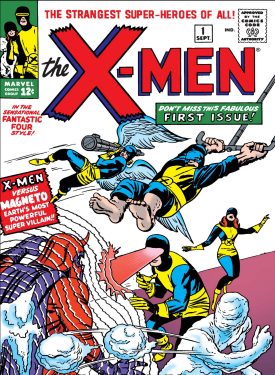
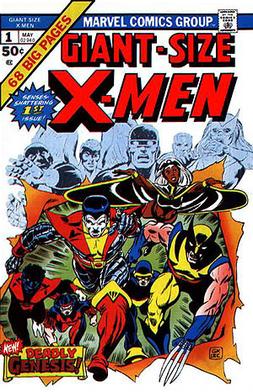
Covers shown to help you recognize the books. The characters and cover art are trademarks and copyrights of Marvel.
Original or Reprint?
From #67 to #93, between 1970 and 1975, X-Men reprinted 1960s stories instead of new ones. Those issues are worth less than the originals but still belong with the run. Later reprint titles, such as Classic X-Men from the mid-1980s, and newer editions with a much higher cover price are worth much less again.
About the Prices You See Online
The headline prices for X-Men #1 and Giant-Size X-Men #1 come from rare copies in top condition. Worn copies sell for a fraction of that, though the early keys stay wanted even with creases and spine wear. Outside our area? Key issues like these can also come to us by mail.
Why a Long Row of X-Men Issues Matters
Collectors use the word run for a stretch of consecutive issue numbers from one title. Anyone filling a series in order looks for exactly that, so a long row of numbers draws interest.
Gaps are normal, and a run with missing numbers still counts. Landmark issues also tend to hide in the middle of a stack where nobody noticed them. Please leave everything in the order you found it, even if that order looks random, and we will sort it during your Free Collection Review.
A run that starts at 12¢ and carries on into the 15¢ years may hold both the original team and the 1975 one. Our Bronze Age guide explains what we look for in the later issues; either way, we judge the whole span as one collection rather than cherry-picking.
Worn, Musty or Taped X-Men Comics
We will be straight with you about condition, because it does shape any offer. A flat, bright copy means more to collectors than one with a torn cover, missing pages or water stains. Still, 1960s comics were made to be read and passed around, so creases, faded color, loose staples and a basement smell are normal.
Wear alone should not stop you from trying to sell X-Men comics that look tired. Please do not tape, clean, press or trim anything, since home repairs often make things worse. Our page asking whether damaged comic books are worth anything explains more. If some X-Men are sealed in hard plastic cases from CGC or CBCS, grading companies that rate condition, keep them sealed; we buy graded comics too.
Selling the Whole Box or Listing Issues Online
Listing X-Men one issue at a time online is an option. For a single valuable book it can bring a retail price, but every listing means photos, a description, fees, packing, shipping and the chance of a return. Our guide to selling comics on eBay or to a buyer weighs both paths fairly.
Here is how it works when you sell X-Men comics to us. We resell the comics we buy to collectors over time, which is why our offer is a wholesale offer for the collection. In return you skip the sorting, listing and shipping, and if you say yes, you get same-day cash. We do not buy comics from after the mid-1980s on their own, and we will tell you that kindly and early.
Inherited old X-Men comics? What to Do With Old Comic Books walks through the honest options, from keeping them to selling the whole lot. An Executor’s Guide to Selling a Comic Book Collection helps when the comics are part of an estate.
How to Start When You Want to Sell X-Men Comics
The first step is our short contact form. Photos are welcome but not required: a few covers, the small print from one or two issues and a view down into each box are plenty. There is nothing to identify, grade or count, and sending the form does not commit you to selling.
Prefer the phone? Call (856) 438-8222 in Cherry Hill and South Jersey, (215) 390-0020 in Philadelphia and the Pennsylvania suburbs, or (302) 414-0544 in Northern Delaware.
All buying is in person and by appointment, within about a two-hour drive. You can bring a manageable collection to whichever of our New Jersey, Pennsylvania or Delaware warehouse locations suits you; for a larger one, we review it where it sits after seeing photos, so nobody hauls heavy boxes. For the full sequence, see how it works.
Common Questions
How can I tell if I have the 1963 X-Men #1?
Look for #1 on the cover, a 12¢ price and a 1963 date in the small print inside. If the price or date does not match, it is a later comic, and a photo lets us tell you which.
Is Giant-Size X-Men #1 part of the regular X-Men numbering?
No. It is a separate 1975 comic that introduced the new team, and the regular X-Men title picked up that team with #94 the same year.
Are X-Men comics from the 1990s and later something you buy?
Not on their own: we buy comics up to the mid-1980s. If newer X-Men comics are mixed in with older ones, we take the whole lot when we buy the collection.
Will anyone else know I sold the comics?
No. Selling to us is private and discreet. We meet by appointment, keep your name and address to ourselves, and never put anything about you on the internet.
The X-Men belonged to a parent who passed away. Can you help?
Yes, and you do not need to know what the comics are first. For any estate purchase you receive a written receipt with the date, a description of what we bought and the amount paid.
Local Comic Book Buyers Serving Greater Philadelphia
We buy in person, by appointment, within about two hours of our Cherry Hill, New Jersey base. Call the team closest to you.
South Jersey and Cherry Hill
Camden, Burlington and Gloucester counties and the rest of South Jersey.
Philadelphia and PA Suburbs
Philadelphia and the surrounding Pennsylvania suburbs.
Northern Delaware
Wilmington and the surrounding Northern Delaware communities.
Get a Free Collection Review
Send a few photos or call. Same-day cash, no sorting and no obligation to sell.