
Sell Batman Comics and Early Detective Comics to a Local Buyer
Maybe they turned up in a cedar chest, on a closet shelf or in a carton labeled in a relative’s handwriting: comics with Batman on the cover, and a few older ones titled Detective Comics. If you want to sell Batman comics like these, ComicBookBuying.com will look through them in person and make an offer on the whole group.
We are based in Cherry Hill, New Jersey, and buy throughout Philadelphia and its suburbs, South Jersey and the Wilmington area of Northern Delaware. You do not need to know a single issue number to get started.
What we buy: comics from the 1930s to the mid-1980s, in any condition, from one box to a whole basement. We don’t buy newer comics, but when we buy an older collection we take the whole lot, newer comics mixed in included, so the family isn’t left with boxes.
Free collection review · Same-day cash · No obligation · South Jersey, Philadelphia and Northern Delaware
Batman or Detective Comics? Two Titles, One Hero
Batman did not debut in a comic with his own name on it. He first appeared in Detective Comics #27 in 1939, and his own series, Batman, started with #1 in 1940. That first Batman issue also introduced the Joker and Catwoman.
Collectors call books like these key issues: a character’s debut or another turning point that people hunting for a title want most. Few family collections hold either one, and everyday issues with either name on the cover count too.
How to Recognize an Old Batman Comic in a Few Minutes
Check a few comics from the top, middle and bottom of each box, then put each one back where it was.
- The corner box. Many older covers show the price, and often the issue number, in a small panel near the top corner. Collectors call it the corner box.
- The cover price. A price in cents, such as 10¢ or 12¢, marks a comic from the 1960s or earlier.
- The small-print date. Ease the cover open and look for a line of very small type inside the cover or at the foot of page one. Its month and year settle the question.
- The issue number. Batman began at #1 in 1940, so a low number means an early copy. Detective Comics was already at #27 when Batman arrived and kept counting, so a big number on that title does not mean the comic is recent.
Helpful guides: What Is a Key Issue Comic? explains why a few books in a stack can matter more than the rest, and Comic Book Grading Explained covers the 10-point scale and the flaws that lower a grade.
The Batman Eras We Most Hope to See
Across everything we buy, older DC shares the top of our list with 1960s Marvel, and Batman is one of the DC names we watch for most:
- 1939 through the 1950s. Collectors call superhero comics from the late 1930s into the 1950s the Golden Age. Any Batman or Detective Comics from these years interests us, well-read copies included; see our page on Golden Age comics, and for the team book that named Batman an honorary member, our page on All-Star Comics.
- The 1950s and 1960s. Batman and Detective Comics from these decades are high on our list, often alongside Flash, Green Lantern or Justice League. Our guide to Silver Age comics helps you date them.
- The 1970s onward. We buy Batman up to the mid-1980s, so leave the later issues in the boxes. Newer Batman we do not buy on its own, but when we buy an older collection we take the whole lot.
Superman in the boxes too? Our page on how to sell Superman comics covers Action Comics as well.
Batman and Detective Comics Key Issues We Look For
Batman’s key issues are split between his own title and Detective Comics. These are the ones collectors ask about first:
- Detective Comics #27 (1939): the first Batman.
- Batman #1 (1940): the first Joker and the first Catwoman.
- Detective Comics #38 (1940): the first Robin.
- Detective Comics #58 (1941): the first Penguin.
- Detective Comics #66 (1942): the first Two-Face.
- Detective Comics #140 (1948): the first Riddler.
- Batman #121 (1959): the first Mr. Freeze, then called Mr. Zero.
- Batman #181 (1966): the first Poison Ivy.
- Detective Comics #359 (1967): the first Batgirl, Barbara Gordon.
- Batman #232 (1971): the first Ra’s al Ghul.
- Batman #251 (1973): the Joker’s Five-Way Revenge, with a famous Neal Adams cover.
- Batman #357 (1983): the first Jason Todd.
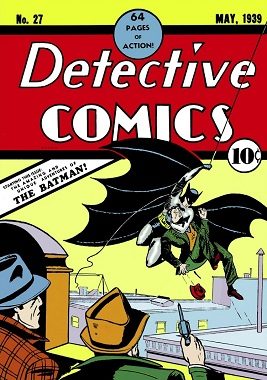
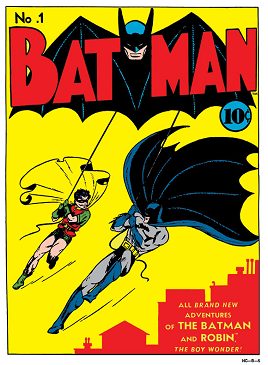
Covers shown to help you recognize the books. The characters and cover art are trademarks and copyrights of DC.
Original or Reprint?
In the 1970s, DC printed oversized Famous First Edition copies of Detective Comics #27 and Batman #1. They are much larger than a normal comic and worth far less than the originals, and the same goes for the Millennium Edition reprints from 2000. Giant issues and annuals from the 1960s also reprint older stories.
About the Prices You See Online
The famous Batman auction records are for Golden Age copies few families ever see. Most Batman books in family boxes come from the 1950s to the 1970s, and their prices depend heavily on condition, which is why we look at each key in person. Outside our area? Key issues like these can also come to us by mail.
Why Runs of Batman and Detective Comics Matter
A run is a stretch of one title in unbroken number order, such as several years of Detective Comics with only a few gaps. Many readers picked up Batman month after month, so runs often turn up in family boxes.
Collectors use runs to fill holes on their own shelves, and landmark issues tend to hide inside them. If someone pulls out the covers that look special, a run gets broken up before anyone who knows comics has seen it. Before you sell Batman comics, leave each stack in its order, ordinary issues included; we review every box together instead of cherry-picking.
Condition: An Honest Look at Well-Read Batman Comics
Comics from the 1940s to the 1960s were rolled up, traded and stored in attics, so tan pages, creases, loose covers, a name in pen and a musty smell are normal. Condition matters a great deal to collectors, and it does shape our offer.
Still, wear does not automatically rule out an early Batman or Detective Comics, and we will explain plainly what we see. Please do not clean, tape, iron or trim anything; our page on comics in rough shape explains why. Books in a sealed, clear case labeled CGC or CBCS have been graded, meaning rated for condition, and we buy graded comics from the 1930s to the mid-1980s.
One Offer for Everything, or Book by Book Online
A single standout Batman issue can reach collectors at retail prices online. Selling that way also means photographing every flaw, writing a listing, covering selling fees, packing fragile paper and risking a return. Our comparison of selling on eBay or to a local buyer lays out both sides fairly.
When you sell Batman comics to us, there is one Free Collection Review and one offer. Our business is reselling to collectors gradually, which makes ours a wholesale offer for everything together, not a retail figure for each book. In exchange, you have nothing to sort, list or ship, and if you accept, it is same-day cash.
Clearing out a parent’s house? Clearing Out a House With Comic Books explains how to keep old Batman and Detective Comics safe until the clean-out, and Old Comic Book Cover Prices helps you tell how old they are.
Where to Begin When You Want to Sell Batman Comics
Take three or four phone photos: a couple of Batman or Detective Comics covers, one page of small print, and a wide shot of the boxes. Send them through our short online form, or call. Photos help but you can skip them, there is no need to identify, grade, sort or count a thing, and getting in touch does not commit you to sell.
A manageable collection can come by appointment to a warehouse location of ours in New Jersey, Pennsylvania or Delaware. We see bigger collections in photos first, then review them where they sit, so heavy boxes stay put. The sale is private and discreet; we do not share who you are or where you live, and nothing about you goes on the web. Our three-step process and service area pages have the details.
To call, use (856) 438-8222 for Cherry Hill and South Jersey, (215) 390-0020 for Philadelphia and its suburbs in Pennsylvania, or (302) 414-0544 for Northern Delaware.
Common Questions
Should Detective Comics go in the same pile as my Batman comics?
There is no need to make piles; leave them where they are. Batman first appeared in Detective Comics #27 in 1939, a year before his own series, so we treat both titles as one collection.
I think I have Batman #1. What should I do?
Keep it flat and dry, handle it as little as possible and do not try to fix it. Send photos of the cover and small print, and we will look at it in person.
Are Batman comics from the 1990s something you buy?
Not by themselves: we buy comics up to the mid-1980s. If 1990s Batman comics are mixed in with older ones, we take the whole lot when we buy the collection.
We are settling an estate. Will we get a receipt for the Batman comics?
Yes. Estate purchases come with a written receipt every time, showing the date of the sale, which comics we bought and the amount.
Local Comic Book Buyers Serving Greater Philadelphia
We buy in person, by appointment, within about two hours of our Cherry Hill, New Jersey base. Call the team closest to you.
South Jersey and Cherry Hill
Camden, Burlington and Gloucester counties and the rest of South Jersey.
Philadelphia and PA Suburbs
Philadelphia and the surrounding Pennsylvania suburbs.
Northern Delaware
Wilmington and the surrounding Northern Delaware communities.
Get a Free Collection Review
Send a few photos or call. Same-day cash, no sorting and no obligation to sell.