
Sell All-Star Comics and Other 1940s DC Hero Comics
All-Star Comics put a whole team of heroes between one set of covers in 1940, and copies still surface in old trunks and closets. If you want to sell All-Star Comics, or the 1940s DC hero comics that came with them, such as Flash Comics, All-American Comics, Sensation Comics and Wonder Woman, ComicBookBuying.com will examine them at an appointment and offer one price for the whole collection.
Based in Cherry Hill, New Jersey, we buy in person around Philadelphia, across South Jersey and down into Northern Delaware. No issue numbers or lists are needed to begin.
What we buy: comics from the 1930s to the mid-1980s, in any condition, from one box to a whole basement. We don’t buy newer comics, but when we buy an older collection we take the whole lot, newer comics mixed in included, so the family isn’t left with boxes.
Free collection review · Same-day cash · No obligation · South Jersey, Philadelphia and Northern Delaware
All-Star Comics and the First Superhero Team
All-Star Comics #3, from 1940, brought heroes from different DC titles together as the Justice Society of America, the first superhero team in comics. Members over the years included the Flash, Green Lantern, Hawkman and the Spectre, and the series ran until 1951, when it became All-Star Western.
A team book like this ties a whole family of titles together, which is why a box with All-Star Comics often holds the heroes’ own comics too. Our page on Golden Age comics explains how this era fits with Superman and Batman.
Firsts That Make These Comics Stand Out
- All-Star Comics #3 (1940): the first Justice Society of America.
- All-Star Comics #8 (1941): the first appearance of Wonder Woman.
- Sensation Comics #1 (1942): Wonder Woman’s first cover and the start of her regular stories.
- Wonder Woman #1 (1942): her own title.
- Flash Comics #1 (1940): the first Flash and Hawkman.
- All-American Comics #16 (1940): the first Green Lantern.
Collectors call issues like these key issues: first appearances and other landmarks that people look for first. Ordinary issues of the same titles interest us as well, so please do not set a box aside because none of these is inside. Our guide to what a key issue is has more examples.
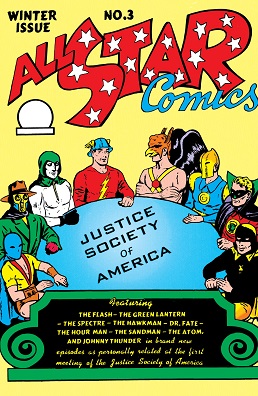
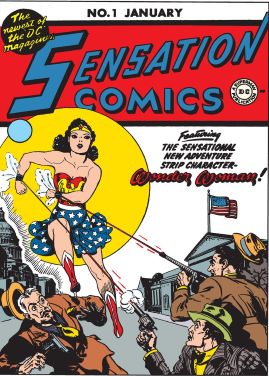
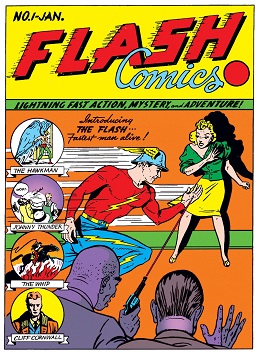
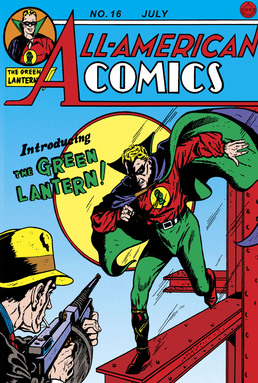
Covers shown to help you recognize the books. The characters and cover art are trademarks and copyrights of DC.
How to Recognize 1940s DC Hero Comics
- The year in the small print. A date from 1940 to the early 1950s on Flash Comics, All-American Comics or All-Star Comics settles the question.
- The heroes themselves. The 1940s Flash wears a metal helmet with wings, and the 1940s Green Lantern wears a cape and a high collar, quite unlike the 1960s heroes with the same names.
- The page count. Comics from the early 1940s often held more pages, so they can feel thick next to later issues.
- The cover price. 10¢ is typical, but that price lasted into the early 1960s, so use the year to be sure.
Our page on old comic book cover prices explains how prices help date a stack.
The Justice Society After the 1940s
When the Flash and Green Lantern were reinvented around 1960, the original heroes came back too. The Justice Society met the Justice League in Justice League of America #21 in 1963, and All-Star Comics itself returned in 1976 with issue #58, the first appearance of Power Girl.
We buy DC comics up to the mid-1980s, so these later issues belong in the same boxes. Our page on Silver Age comics covers 1950s and 1960s DC titles in more detail, and our Superman and Batman pages cover the two heroes the team named as honorary members.
An Honest Look at Condition
Comics this old have usually lived hard lives. Tan or brown paper, chipped edges, rolled spines, writing on the cover and loose staples are what we expect to see. Condition weighs heavily with collectors, so it does shape our number.
Still, a worn 1940s DC hero comic is not automatically worthless, and we will tell you plainly what we see. Please do not clean, tape or press anything; our page on damaged comics explains why. Comics sealed in a clear case with a CGC or CBCS label are graded comics, and we buy those too.
Why One Offer for the Whole Collection Helps
A single famous issue can bring a retail price online, but selling it that way means proving it is genuine, listing every flaw, paying fees and shipping fragile paper. We weigh both choices on our page about selling on eBay or to a buyer.
Sell All-Star Comics to us and every box gets looked at together, with no cherry-picking, followed by a single wholesale offer that reflects how we resell to collectors over many months. Agree, and you are paid in cash at the appointment. Anything newer than the mid-1980s we skip as a purchase by itself, yet it leaves with the whole lot when it shares boxes with older comics. Families handling a relative’s things can also read our page on estate collections.
How to Start
To begin, share some phone shots through our short contact form, such as a few covers, the publishing line inside one book and an overview of the boxes. They are useful, not mandatory; sorting and counting are unnecessary, and requesting an offer binds you to nothing.
Appointments are in person within about two hours of Cherry Hill: a modest collection can be brought to our warehouse space in New Jersey, Pennsylvania or Delaware, and a big one is seen in photos before we review it in place. Phone (856) 438-8222 for South Jersey, (215) 390-0020 for Philadelphia and the Pennsylvania suburbs, or (302) 414-0544 for Northern Delaware.
Common Questions
What is All-Star Comics?
A DC title that ran from 1940 to 1951 and brought several heroes together as the Justice Society of America. It returned in 1976.
Do you buy Wonder Woman comics from the 1940s?
Yes. Sensation Comics, Wonder Woman and All-Star Comics from the 1940s are on our list, along with later issues up to the mid-1980s.
My old Flash comic looks nothing like the TV version. Is it still the Flash?
Probably. The 1940s Flash wears a winged metal helmet, and his comics are some of the oldest DC hero books families find.
Are 1970s All-Star Comics worth sending photos of?
Yes. We buy comics up to the mid-1980s, and the 1976 revival is part of the same story.
Do you buy comics from other 1940s publishers too?
Our main interest is superhero comics. Other comics from the same years can come along as part of a collection, so include them in your photos.
Local Comic Book Buyers Serving Greater Philadelphia
We buy in person, by appointment, within about two hours of our Cherry Hill, New Jersey base. Call the team closest to you.
South Jersey and Cherry Hill
Camden, Burlington and Gloucester counties and the rest of South Jersey.
Philadelphia and PA Suburbs
Philadelphia and the surrounding Pennsylvania suburbs.
Northern Delaware
Wilmington and the surrounding Northern Delaware communities.
Get a Free Collection Review
Send a few photos or call. Same-day cash, no sorting and no obligation to sell.