
Sell Wonder Woman Comics, From Sensation Comics to the 1980s
Wonder Woman made her debut in 1941, and families have been reading, saving and boxing up her comics ever since. If you want to sell Wonder Woman comics, whether they are wartime issues of Sensation Comics or 1970s books bought around the time of the television series, ComicBookBuying.com will go through them with you in person and make one offer for the whole collection.
We are based in Cherry Hill, New Jersey, and meet sellers throughout South Jersey, the Philadelphia area and Northern Delaware. You do not need to know which issues you have before you get in touch.
What we buy: comics from the 1930s to the mid-1980s, in any condition, from one box to a whole basement. We don’t buy newer comics, but when we buy an older collection we take the whole lot, newer comics mixed in included, so the family isn’t left with boxes.
Free collection review · Same-day cash · No obligation · South Jersey, Philadelphia and Northern Delaware
Where Wonder Woman Began
William Moulton Marston created Wonder Woman, and Harry G. Peter drew her early stories. Her life on paper starts in three places within a few months of each other:
- All Star Comics #8 (1941): her debut, in a short story at the back of a Justice Society issue. Our page on All-Star Comics covers that title.
- Sensation Comics #1 (1942): her first cover and the start of her monthly adventures.
- Wonder Woman #1 (1942): the first issue of her own series.
She also starred in Comic Cavalcade, a thick 1940s anthology she shared with the Flash and Green Lantern, so a box of her early comics can hold several titles at once. Our page on Flash and Green Lantern comics covers her two partners there.
How to Date a Wonder Woman Comic
Pick a few books from the top, middle and bottom of each box, look, and put them back where they were:
- The name on the cover. Sensation Comics was her home from 1942 into the early 1950s. Wonder Woman is her own title, and Comic Cavalcade belongs to the 1940s.
- The price. 10¢ points to the 1940s or 1950s, 12¢ to most of the 1960s, and prices from 15¢ up to about 40¢ to the years from 1969 to 1980. Our page on old cover prices lists them in order.
- The date in the small print. A line of tiny type, usually on the first page inside, gives the month and year.
- The issue number. Her first series ran from #1 in 1942 to #329 in 1986. A Wonder Woman comic numbered in the hundreds is from that original run.
Wonder Woman Issues Collectors Look For
A key issue is a first appearance or another turning point that collectors of a title want most. For Wonder Woman, the well-known ones include:
- All Star Comics #8 (1941): her first appearance.
- Sensation Comics #1 (1942): her first cover.
- Wonder Woman #1 (1942): her own title begins.
- Wonder Woman #6 (1943): the first Cheetah, her longtime foe.
- Wonder Woman #105 (1959): the first Wonder Girl.
- Wonder Woman #178 and #179 (1968): the start of the mod era, when Diana set aside her powers and costume.
- Wonder Woman #204 (1973): her powers and costume return.
Most family collections hold none of the oldest books on this list, and that is fine. Ordinary issues from every decade we buy interest us as well. Our guide to key issue comics explains the idea in more depth.
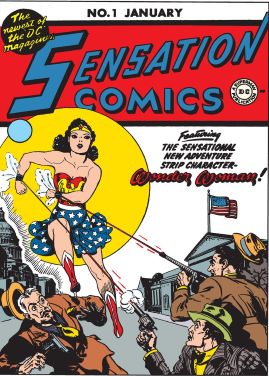
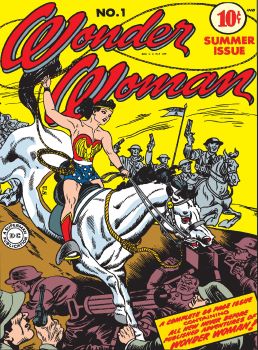
Covers shown to help you recognize the books. The characters and cover art are trademarks and copyrights of DC.
From the War Years to the Television Era
In 1960 Wonder Woman became a founding member of the Justice League of America, so many 1960s boxes mix her own title with Justice League and other DC books. In 1968 the stories changed course: Diana gave up her powers and costume for a few years of martial arts and spy adventures before both came back in 1973.
The television series of the 1970s brought a new wave of readers, and plenty of family collections hold comics bought in those years. Please keep each stack in the order you found it. A long run, meaning a stretch of consecutive issues, is easier to judge when it stays together. Our pages on Silver Age comics and Bronze Age comics cover the other DC titles from these years.
Condition, Plainly Explained
Wonder Woman comics from the 1940s and 1950s were read hard. Yellowed or brown pages, worn corners, a loose cover, a coupon clipped from the back or a name written in ink are normal for books this old. Condition counts for a lot with collectors, and it does shape what we offer; we would rather tell you that up front.
A worn early issue still deserves a look, and so does a 1970s copy with a creased spine. Leave the comics as they are: no tape, no erasing and no pressing. Our page on damaged comics explains why, and books already sealed and labeled by CGC or CBCS count as graded comics; we buy those as well.
One Offer Instead of Many Listings
An important Wonder Woman issue can sell to a collector online at a retail price. That route also means photographing every flaw, proving the book is not a reprint, paying fees and shipping fragile paper, one listing at a time. Our page weighing eBay against a local buyer sets out the tradeoffs.
With us, every box is reviewed together and you receive a single wholesale offer, since we resell to collectors over time. If you say yes, the cash changes hands at the appointment; if you say no, you owe nothing. Comics from after the mid-1980s are outside what we buy on their own, but any packed in with the older ones leave with the whole lot, so the family has nothing left to sort out.
How to Get Started
Take a few phone pictures: two or three covers, the small print inside one comic and the boxes as they sit. Send them through our short contact form or simply call. Photos are optional, no list is needed and asking for an offer commits you to nothing.
Small groups can come to us by appointment at a warehouse in New Jersey, Pennsylvania or Delaware, whichever is closer. Bigger collections are seen in photos first and then reviewed in place. Our how it works page walks through each step. Call (856) 438-8222 for South Jersey, (215) 390-0020 for Philadelphia and the Pennsylvania suburbs, or (302) 414-0544 for Northern Delaware.
Common Questions
Is Sensation Comics a Wonder Woman comic?
Yes. Sensation Comics was her main home in the 1940s, with Wonder Woman on most covers and other heroes inside.
Do you buy Wonder Woman comics in rough condition?
Yes. Tired copies with faded colors or loose covers still interest us. Please leave them unrepaired and show them in your photos.
My Wonder Woman comic is from 1987 or later. Do you buy it?
Not by itself. Her series started over at #1 in 1987, which is newer than we buy, but later issues in boxes with older comics go with the whole lot.
Do you buy Justice League comics that include Wonder Woman?
Yes. Justice League of America from 1960 to the mid-1980s is on our list, along with other DC titles from those years.
Should I sort the comics by title first?
No. Leave them in the order you found them. Sorting is part of our review.
Local Comic Book Buyers Serving Greater Philadelphia
We buy in person, by appointment, within about two hours of our Cherry Hill, New Jersey base. Call the team closest to you.
South Jersey and Cherry Hill
Camden, Burlington and Gloucester counties and the rest of South Jersey.
Philadelphia and PA Suburbs
Philadelphia and the surrounding Pennsylvania suburbs.
Northern Delaware
Wilmington and the surrounding Northern Delaware communities.
Get a Free Collection Review
Send a few photos or call. Same-day cash, no sorting and no obligation to sell.